The Boston beginning
I think of Rose Gnecco as a person standing at the edge of a bright and dangerous fire. Her name is usually spoken beside Charles Ponzi, but she was not a shadow. She was a Boston-born woman, raised in an Italian-American family, working as a stenographer before marriage, moving through a city that was crowded, practical, and always in motion. Her life began in 1895, and from the start it was tied to the rhythms of immigrant Boston, where family, work, and survival were braided together like ropes on a dock.
Rose came from a family that appears to have lived in the orbit of small commerce, especially fruit and grocery work. That detail matters. It tells me that her world was not grand in the theatrical sense, but it was busy and real, filled with early mornings, counted coins, and the long discipline of keeping a household steady. In stories like hers, the domestic world often acts like bedrock. It supports everything, even when the world above it trembles.
Her name appears in records in a few forms, most often as Rose Gnecco and Rose Maria Gnecco, and later as Rose Maria Gnecco Ebner after remarriage. The changing name reflects a changing life, but the center remains the same: a woman who lived through one of the most famous fraud stories in American history and still retained her own separate human outline.
Marriage to Charles Ponzi
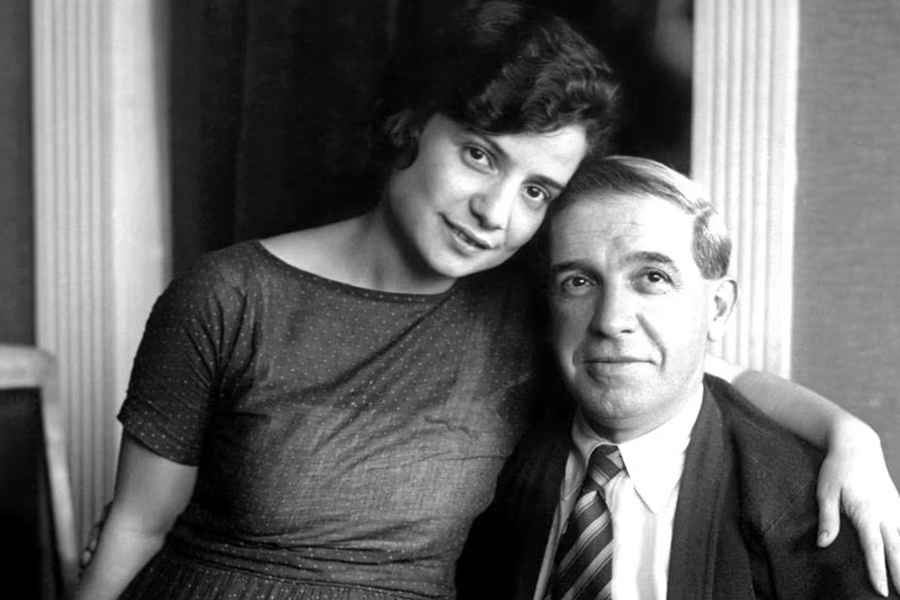
Rose married Charles Ponzi on 4 February 1918 in Somerville, Massachusetts. That date is one of the key hinges in her life. Soon after the marriage, Ponzi’s fortunes began to rise in dramatic and ultimately disastrous fashion. He would become a national symbol of deception, the name attached forever to a scheme that fed on speed, hope, and illusion.
I see Rose at the margin of that storm, close enough to feel the wind. Ponzi reportedly met her on a streetcar and courted her with urgency. After the marriage, he moved through a period of failed business attempts before launching the investment scheme that made him notorious. Rose’s life, meanwhile, was bound to the public rise of a private man whose ambitions grew larger than any ordinary household could safely hold.
The marriage did not create Ponzi’s fraud, but it placed Rose inside its geography. She was there for the ascent, the wealth, the attention, and the collapse. She was also there for the consequences, which lasted far longer than the headlines. According to the family history that survives, she and several relatives even loaned Ponzi money during the period of his success, a painful reminder that fraud does not only damage strangers. It often burns inward first.
Ponzi was deported in 1934, and Rose remained in Boston for a time. Their marriage ended in divorce in 1937. That divorce closed one chapter, but it did not erase the public memory attached to her first husband. Rose had to carry a name that the world knew for the wrong reasons, while trying to keep her own life in balance.
The Gnecco family circle
The family story around Rose is wider than one marriage. The names attached to her point to a larger Boston Gnecco network, likely built through kinship, work, and the ordinary strength of immigrant family life. Some relationships are clearly documented, while others appear in genealogical fragments and obituary trails. I treat them as part of the family circle that shaped Rose, even where the exact branch of the tree is not perfectly clear.
| Family member | Relationship to Rose | What the record suggests |
|---|---|---|
| John B. Gnecco | Likely father | Appears in genealogical identification as her father |
| Maria Malatesta | Likely mother | Appears in genealogical identification as her mother |
| Charles Ponzi | First husband | Married in 1918, later divorced |
| Joseph Ebner | Second husband | Rose married him in 1956 |
| John Gnecco | Likely sibling or close relative | Named in family obituary trails |
| James Gnecco | Likely sibling or close relative | Named in family obituary trails |
| Andrew Gnecco | Likely sibling or close relative | Named in family obituary trails |
| Cesare Gnecco | Likely sibling or close relative | Named in family obituary trails |
| Charles Gnecco | Likely sibling or close relative | Named in family obituary trails |
| Theresa Bertoldi | Likely sister or close relative | Named in family obituary trails |
| Josephine Chiosso | Likely sister or close relative | Named in family obituary trails |
| Marie R. McHoul | Likely sister or close relative | Named in family obituary trails |
The names in that table matter because they place Rose inside a broader family landscape, not just beside a famous husband. They suggest a household and a wider kinship web that likely shared resources, worries, and loyalty. Italian-American families in Boston often functioned like small villages inside the city, and the Gneccos seem to fit that pattern. Work passed through relatives. Business passed through relatives. Hardship, too, passed through relatives.
I picture this family as a handwoven net. Each knot is a person. If one strand pulls too sharply, the whole thing shivers.
Rose as a worker and a witness
Rose was a stenographer before marriage. That element may seem minor, but I disagree. A stenographer listens, records words, and records motion. That character suits a woman whose life would eventually be recorded. She was trained to preserve others’ words and actions.
Her work life is seldom chronicled, which is telling. Not everyone leaves a promotion, title, or award record. Some lives are documented by relationship and effect. The biography of Rose fits that category. Career arcs were not her forte. She was famous because history touched her family.
I wouldn’t call her passive. Stamina was needed to survive that scandal. Ponzi was the public focus, but the lady who witnessed his rise and fall watched financial pressure invade the domestic sphere like water through a damaged wall.
The second marriage and later years
After her divorce from Ponzi, Rose later married Joseph Ebner in 1956. That marriage gave her a new family identity and a later chapter that was quieter than the Ponzi years. The shift from Ponzi to Ebner suggests not reinvention in the theatrical sense, but a practical turn toward ordinary life. After spectacle, many people reach for privacy. After notoriety, they seek a room with the curtains drawn.
She died on 31 October 1993 in North Attleborough, Massachusetts, and was buried at Newton Cemetery. By then, the name Ponzi had become a historical shorthand, but Rose herself had lived long enough to outlast the scandal that attached to her first marriage. That longevity matters. It gives her story weight. She was not a footnote that vanished at the end of the crisis. She lived on, remarried, and entered old age carrying the full distance of the twentieth century.
Family members in focus
Rose’s portrait is shaped by each named relative.
She has a specific immigrant lineage if her parents are John B. Gnecco and Maria Malatesta. They symbolize birth, home discipline, and identity formation.
Ponzi marks the break. He makes Rose appear in several historical summaries. She became involved in one of America’s worst financial scandals through him.
Joseph Ebner portrays a quieter bridge later. His presence proves Rose’s life continued after Ponzi. She started another chapter under a new identity.
Obituary traces list John, James, Andrew, Cesare, Charles, Theresa Bertoldi, Josephine Chiosso, and Marie R. McHoul as Gnecco relatives, indicating a wide and interrelated family. Even when branch locations are unclear, the pattern is obvious. The rose originated from people. She arrived with others.
FAQ
Who was Rose Gnecco?
Rose Gnecco was a Boston-born stenographer and the first wife of Charles Ponzi. She was later known as Rose Maria Gnecco Ebner after her second marriage.
When did Rose Gnecco marry Charles Ponzi?
She married Charles Ponzi on 4 February 1918 in Somerville, Massachusetts.
Did Rose Gnecco have a life outside Charles Ponzi?
Yes. She worked as a stenographer, came from a Boston Italian-American family, later remarried Joseph Ebner in 1956, and lived until 1993.
Who were Rose Gnecco’s family members?
The family record points to likely parents John B. Gnecco and Maria Malatesta, a second husband Joseph Ebner, and several named relatives in the Gnecco family line, including John, James, Andrew, Cesare, Charles, Theresa Bertoldi, Josephine Chiosso, and Marie R. McHoul.
Why is Rose Gnecco historically important?
She matters because her life intersects with the rise and collapse of Charles Ponzi, but also because she shows the human cost behind a famous fraud. She was part of the family and emotional structure around a man whose name became a warning sign for generations.