Early Life and Family Roots
I was drawn to Portia M. Washington when I learned she was the first child born on the Tuskegee Institute campus on June 6, 1883. Her entrance began a resilient family’s new chapter. The daughter of Booker Taliaferro Washington and Fannie Smith Washington, she lost her mother in 1884. That early vacuum formed her. Olivia A. Davidson Washington and Margaret Murray Washington raised her and her half brothers Booker Taliaferro Washington Jr. and Ernest Davidson Washington, born in 1889 and 1892, respectively.
Washington and Jane Ferguson were her paternal grandparents. Stories of escaping slavery were carried. She lived a peaceful symphony that echoed her father’s lofty schooling ideal. By 10, her piano skills were impressive. Despite racism, she attended New England residential schools. Wellesley College accepted her in 1901. She graduated from Bradford Academy as the first black student in 1905. Three stepmothers, two half brothers, and one ambitious daughter who crossed state boundaries for opportunities.
Her family was rooted in Alabama. Father Booker Taliaferro Washington guided her throughout. He gave her a piano on her wedding day and arranged her excellent education. Fannie Smith Washington, her mother, died too soon but left a quiet strength. Tuskegee ties helped the half brothers learn brick building and medicine. In my mind, family dinners are replete with discussions about advancement and fame.
Marriage Family Life and Personal Bonds
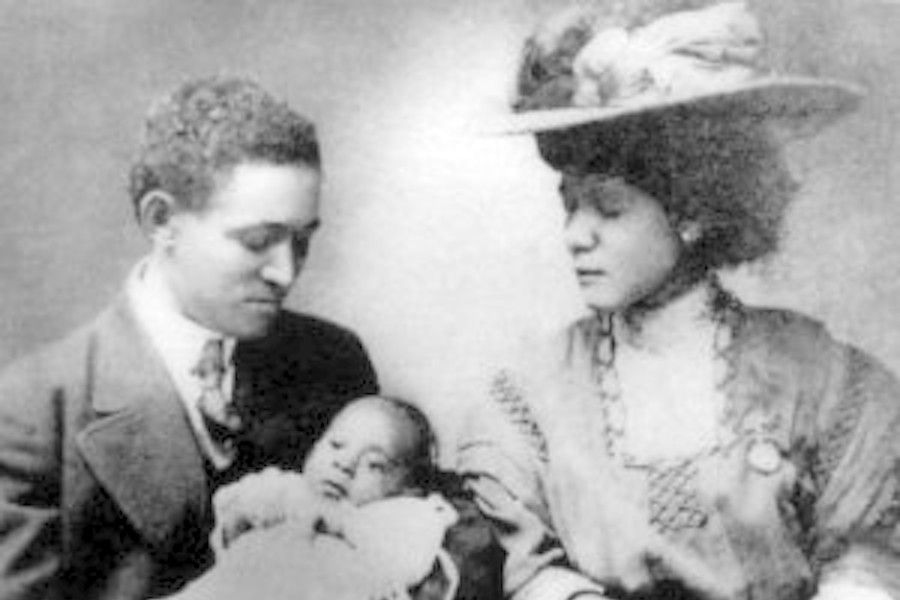
Portia M. Washington met architect William Sidney Pittman around 1900 at Tuskegee. Their romance bloomed fast. They married on October 31 1907 in the Tuskegee chapel. Three children followed in quick succession: son William Sidney Pittman Jr. born about 1909 son Booker Pittman born about 1910 and daughter Fannie Virginia Pittman born about 1913. The family moved first to Washington D.C. in 1908 then to Dallas Texas in 1913. Life together held promise yet cracks formed. Financial strains from inconsistent architecture contracts tested them. A 1928 quarrel with their daughter led to separation. Portia left with Fannie and returned to Tuskegee.
William Sidney Pittman served as president of the Brotherhood of Negro Building Mechanics of Texas. He attended his funeral in Dallas on February 19 1958 though they had lived apart for decades. All three children predeceased her: the sons in 1967 and 1969 the daughter in 1973. No public records detail grandchildren yet the nuclear family of five formed the core of her private world. I imagine those years as a duet that started in harmony then shifted to solo notes of independence. Portia supported the household through private piano lessons during lean times. Her bond with her father remained the steady bass line. After his death on November 14 1915 she campaigned tirelessly for his memorials.
Here is a clear family overview in table form for quick reference:
| Family Member | Relationship to Portia | Key Dates and Notes |
|---|---|---|
| Booker Taliaferro Washington | Father | 1856 to 1915 founder of Tuskegee Institute |
| Fannie Smith Washington | Mother | Died 1884 only child together |
| Olivia A. Davidson Washington | Stepmother | 1854 to 1889 helped raise young Portia |
| Margaret Murray Washington | Stepmother | 1865 to 1925 assisted in rearing |
| Washington Ferguson and Jane Ferguson | Grandparents | Paternal line from enslavement era |
| Booker Taliaferro Washington Jr. | Half brother | Born about 1889 trained in brick masonry |
| Ernest Davidson Washington | Half brother | Born about 1892 pursued medical path |
| William Sidney Pittman | Husband | 1875 to 1958 architect separated 1928 |
| William Sidney Pittman Jr. | Son | Born about 1909 died 1967 |
| Booker Pittman | Son | Born about 1910 died 1969 |
| Fannie Virginia Pittman Kennedy | Daughter | Born about 1913 died 1973 |
These connections wove a tapestry of duty love and quiet endurance.
Career Path Achievements and Financial Realities
Portia M. Washington made piano her career. Between 1905 and 1907, she studied under Franz Liszt student Martin Krause in Berlin. Her homecoming concert debut was in May 1908 in Washington D.C. with violinist Clarence Cameron White. Tours followed. She began teaching music at Dallas’ Booker T. Washington High School in 1925. She chaired the Texas Association of Negro Musicians education department.
Her March 1927 success was her greatest. At the National Education Association convention, she led a 600-voice Dallas choir. The first Black high school ensemble performed there. Audience wanted three encores and sang spirituals. She taught piano at the Tuskegee public school music glee group and choir from 1928 until 1939. She led the Tuskegee choir for 25 years. She left the faculty in 1939 over new accreditation criteria and opened a home music studio until her 1944 retirement at 61.
Financials were tight. Her husband’s contracts often lapsed. She gave private lessons to support the family. No records reflect her riches, but she valued stability. She focused on her father’s legacy beyond music. She installed his bust in the New York Hall of Fame on May 23, 1946. On August 7, she helped get Truman’s permission for five million Booker T. Washington half-dollar coins. She co-founded the Booker T. Washington Scholarship Foundation. His Virginia birthplace became a national monument in 1949 thanks to her efforts. These works are her silent masterpieces.
Timeline of Milestones
To capture the sweep of her 94 years I mapped key moments with exact dates and numbers:
- June 6 1883: Birth at Tuskegee the first campus child.
- 1884: Mother dies.
- 1905: Graduates Bradford Academy first African American to do so.
- 1907 October 31: Marries William Sidney Pittman.
- 1908: Concert debut in Washington D.C. first child born.
- 1913: Family relocates to Dallas.
- 1915 November 14: Father dies.
- 1927 March: Directs 600 voice NEA choir performance.
- 1928: Separates returns to Tuskegee with daughter.
- 1939: Opens private studio.
- 1944: Retires from teaching.
- 1946 May 23 and August 7: Hall of Fame bust and coin authorization.
- 1949: Birthplace becomes national monument.
- February 26 1978: Dies in Washington D.C. at age 94.
Each date pulses with purpose like beats in a long composition.
FAQ
Who exactly was Portia M. Washington and why does her story matter today?
Portia M. Washington was a pioneering pianist choir director and educator born in 1883 who balanced her own talents with the immense shadow of her father Booker T. Washington. Her story matters because it shows how one woman turned personal loss family duty and racial barriers into a lifetime of quiet breakthroughs. From teaching hundreds of students to preserving national history she proved legacy is not inherited but actively built.
How did her family relationships shape her choices and challenges?
Her father arranged elite schooling and supported her music studies yet early loss of her mother and complicated stepmother dynamics taught resilience. Marriage to William Sidney Pittman brought three children but financial pressures and a 1928 separation forced independence. She raised her daughter alone after that while still honoring half brothers and grandparents. Those bonds fueled her drive to support her household through lessons and to champion her father’s memorials long after 1915.
What were her standout career achievements in numbers and impact?
She directed a 600 voice choir in 1927 that earned three encores at a national convention. She taught at Tuskegee for 11 years and the Dallas high school before that. As the first African American Bradford Academy graduate in 1905 she studied piano in Berlin for two years. Her 1946 efforts led to five million commemorative coins and a Hall of Fame bust. Those numbers reflect real doors opened for Black musicians and students.
Did financial struggles define parts of her life and how did she overcome them?
Yes. Inconsistent architecture income from her husband created repeated shortfalls especially after the 1918 Dallas home fire. Portia gave private piano lessons year after year to steady the household. Even after 1928 separation she ran a home studio until 1944. She never sought wealth but channeled every resource into family and her father’s foundation. That practical grit kept her grounded.
What personal metaphors best capture Portia M. Washington’s journey?
I often picture her life as a piano sonata: early movements full of promise and loss the middle filled with bold chords of teaching and triumph and the final ones soft yet resolute in legacy work. She was the bridge between her father’s dream and the next generation’s song never the loudest note but the one that held the harmony together.