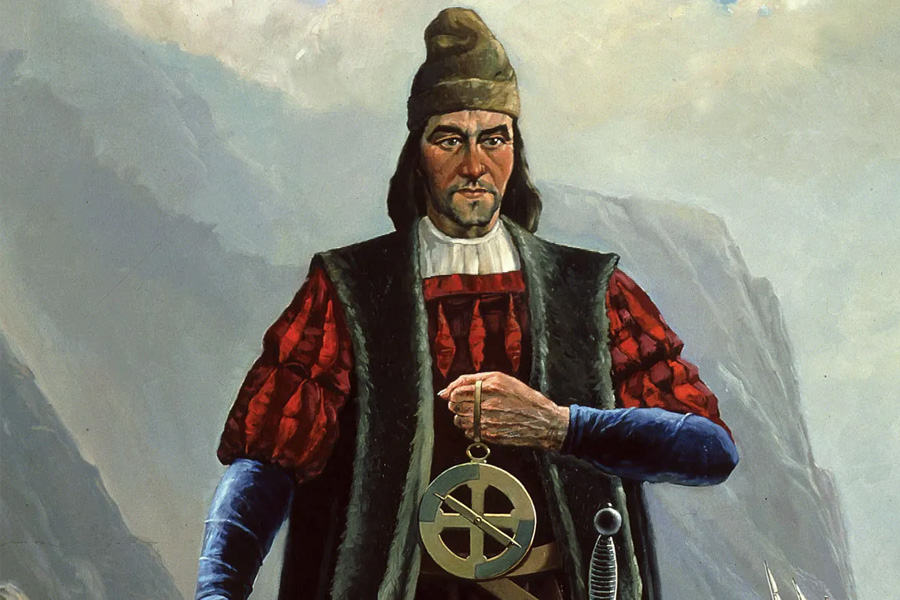
Who Was Bartholomew Dias?
When I think about the turning points in world exploration, Bartholomew Dias stands out as one of the most remarkable figures of the fifteenth century. Born around 1450 near Lisbon, Portugal, Dias became the first European known to sail around the southern tip of Africa in 1488. His achievement transformed geography from speculation into reality and opened a practical sea route linking the Atlantic Ocean with the Indian Ocean.
Although later explorers such as Vasco da Gama often receive greater recognition, I see Dias as the pioneer who unlocked the door. His voyage demonstrated that Africa could be rounded by sea, making direct maritime trade with Asia possible. This single breakthrough helped shape global commerce for centuries.
Basic Information About Bartholomew Dias
| Detail | Information |
|---|---|
| Full Name | Bartholomew Dias (Bartolomeu Dias) |
| Born | c. 1450 |
| Birthplace | Near Lisbon, Portugal |
| Nationality | Portuguese |
| Occupation | Navigator, Explorer, Nobleman, Court Official |
| Known For | First European to round the Cape of Good Hope |
| Major Voyage | 1487 to 1488 expedition around southern Africa |
| Royal Patron | King John II of Portugal |
| Died | 29 May 1500 |
| Place of Death | At sea near the Cape of Good Hope |
| Children | Simão Dias de Novais, António Dias de Novais |
Early Life and Maritime Background
Bartholomew Dias’ early years are unknown. He lost much of his personal life, like many explorers. His family had strong maritime traditions and he was born near Lisbon around 1450.
His family was familiar with adventure. Dinis Dias e Fernandes, his ancestor, traversed western Africa in the 1440s and reached Cap Vert in Senegal. Stories about distant coasts, dangerous storms, and uncharted waters were probably part of everyday talk in such a setting.
Dias joined King John II’s household. He was royal storeroom superintendent and court squire. The king’s faith in his abilities before becoming an explorer showed in these duties.
Preparing for the Historic Expedition
By the late 1480s, Portugal was determined to find a direct sea route to India. Such a route promised access to valuable spices, silk, and other luxury goods without relying on long overland trade networks.
In 1487, King John II selected Bartholomew Dias to command an ambitious expedition. His mission had two objectives.
First, he would search for a navigable route around Africa.
Second, he would attempt to locate the legendary Christian ruler known as Prester John, who many Europeans believed lived somewhere in Africa or Asia.
Dias departed Lisbon during the summer of 1487 with three vessels.
- São Cristóvão, commanded by Dias
- São Pantaleão
- A supply ship commanded by his brother Diogo Dias
The expedition represented one of Portugal’s boldest maritime ventures.
The Voyage That Changed History
The expedition pushed farther south than any previous Portuguese voyage. As the fleet traveled along Africa’s western coastline, they eventually encountered violent Atlantic storms.
Instead of retreating, Dias allowed the winds to carry his ships into open ocean. When the storms finally subsided, the expedition turned east and then north, unknowingly passing the southern tip of Africa.
This accidental maneuver became one of history’s greatest navigational breakthroughs.
Dias eventually reached the eastern coast of Africa and sailed as far as the Great Fish River. Along the way, the expedition erected stone markers known as padrões to symbolize Portuguese claims and achievements.
Despite the success, the crew had reached their limits. Supplies were running low, morale had declined, and many sailors wished to return home. Dias agreed and began the return journey.
Only then did he fully observe the dramatic cape that his outbound voyage had bypassed during the storms.
He named it Cabo Tormentoso, meaning Cape of Storms.
King John II later renamed it the Cape of Good Hope because it represented hope for a successful sea route to India.
Dias returned to Portugal in December 1488 after spending more than sixteen months at sea.
Why the Cape of Good Hope Mattered
I believe the significance of Dias’s achievement cannot be overstated.
Before 1488, no European expedition had demonstrated that the Atlantic and Indian Oceans were connected through a navigable southern route.
After Dias proved this connection, Portuguese ambitions expanded rapidly.
His voyage became the foundation for Vasco da Gama’s expedition from 1497 to 1499, which successfully reached India by sea. The route also helped establish Portugal as one of the world’s leading maritime powers during the Age of Discovery.
In many ways, Dias did not simply discover a cape. He unlocked an oceanic highway that reshaped global trade.
Service After the Great Voyage
Dias did not become wealthy or powerful following his great trip.
He kept helping the Portuguese Crown in practical ways.
He oversaw the construction of Vasco da Gama’s ships for the India voyage. His firsthand knowledge in perilous southern waters made him a useful advisor.
Dias joined Pedro Álvares Cabral’s fleet in 1500.
The fleet visited Brazil before heading to Africa and India. Portugal grew internationally, and Dias shared his wisdom again.
Tragically, fate brought him back to his famed waters.
He lost his ship in a strong storm near the Cape of Good Hope on May 29, 1500.
The water that once opened like a gateway closed around its greatest explorer.
The Dias Family and Their Maritime Legacy
Bartholomew Dias belonged to a family whose contributions extended well beyond his own achievements.
Several relatives participated directly in Portugal’s expanding exploration of Africa, the Atlantic, and the Indian Ocean.
Diogo Dias
Diogo Dias, Bartholomew’s brother, played an important supporting role throughout several historic voyages.
During the 1487 to 1488 expedition, Diogo commanded the fleet’s supply ship. Although less glamorous than leading a caravel, this responsibility was essential. The storeship carried food, equipment, and supplies that allowed the expedition to remain at sea for extended periods.
Diogo also participated in later Portuguese expeditions.
He served in Vasco da Gama’s expedition to India and later joined Pedro Álvares Cabral’s fleet in 1500.
During Cabral’s voyage, Diogo became separated from the main fleet after storms near the Cape of Good Hope. While attempting to recover, he became the first European known to sight Madagascar, which he named Ilha de São Lourenço.
His career illustrates how supporting officers often made discoveries that became historic in their own right.
Bartholomew Dias’s Wife
Historical records preserve very little information about Dias’s wife.
Her name has not survived in the major historical accounts, reflecting the limited documentation available from the period.
Despite the absence of personal details, she was part of a family whose influence would continue for generations.
Simão Dias de Novais
Bartholomew Dias had a son named Simão Dias de Novais.
Although fewer records exist regarding his life than those of his father, he formed part of the continuing Dias family line that remained connected to Portuguese expansion.
António Dias de Novais
Another son, António Dias de Novais, also carried forward the family’s legacy.
Like many members of Portuguese noble families during the Age of Discovery, his descendants remained connected with overseas ventures.
Paulo Dias de Novais
One of the family’s most significant later figures was Paulo Dias de Novais, grandson of Bartholomew Dias.
He became the first governor of Portuguese Angola and founded São Paulo de Luanda in 1576.
His career demonstrated that the exploratory spirit of the Dias family continued long after Bartholomew’s death.
Career Highlights at a Glance
| Year | Event |
|---|---|
| c. 1450 | Born near Lisbon |
| 1481 | Joined voyage to the Gold Coast with Diogo de Azambuja |
| 1487 | Departed Portugal to search for a sea route around Africa |
| 1488 | Rounded the Cape of Good Hope and returned successfully |
| After 1488 | Assisted with preparation of Vasco da Gama’s expedition |
| 1500 | Joined Pedro Álvares Cabral’s fleet |
| 29 May 1500 | Died during a storm near the Cape of Good Hope |
Achievements That Defined His Legacy
Bartholomew Dias accomplished several extraordinary milestones during his career.
- First European navigator to round the southern tip of Africa.
- Demonstrated that the Atlantic Ocean and Indian Ocean were connected.
- Explored more than 1,000 miles of previously uncharted African coastline.
- Helped make Portugal’s future voyages to India possible.
- Assisted in preparing the ships used during Vasco da Gama’s landmark expedition.
- Participated in Pedro Álvares Cabral’s fleet that reached Brazil in 1500.
Wealth and Social Status
No modern wealth estimates exist for Bartholomew Dias.
Court appointments, land ownership, and royal support undoubtedly gave him moderate financial security as a nobleman and royal servant. Portuguese explorers of the 15th century sailed under Crown support.
His greatest riches was accomplishment, not cash. Even though his accomplishments were modestly rewarded, they became world benchmarks.
FAQ
Who was Bartholomew Dias?
Bartholomew Dias was a Portuguese explorer and navigator who became the first European to sail around the southern tip of Africa in 1488, proving that a sea route connected the Atlantic and Indian Oceans.
Why is Bartholomew Dias famous?
He is famous for discovering the navigable route around the Cape of Good Hope, an achievement that paved the way for direct European sea travel to India.
When did Bartholomew Dias make his famous voyage?
His landmark expedition took place between 1487 and 1488, returning to Portugal in December 1488 after more than sixteen months at sea.
How did Bartholomew Dias die?
He died on 29 May 1500 when his ship was caught in a powerful storm near the Cape of Good Hope while sailing with Pedro Álvares Cabral’s expedition.
Who was Diogo Dias?
Diogo Dias was Bartholomew Dias’s brother and a Portuguese navigator. He commanded the supply ship during the famous Cape expedition and later participated in voyages to India, Brazil, and Madagascar.
Did Bartholomew Dias have children?
Yes. He had two sons, Simão Dias de Novais and António Dias de Novais.
Who was Paulo Dias de Novais?
Paulo Dias de Novais was the grandson of Bartholomew Dias. He later became the first governor of Portuguese Angola and founded São Paulo de Luanda in 1576.
Did Bartholomew Dias become wealthy?
There are no reliable financial records from his lifetime. He served the Portuguese Crown as a nobleman and explorer and likely enjoyed moderate wealth rather than great personal fortune.
Why was the Cape of Good Hope important?
The Cape of Good Hope became the gateway to a practical sea route connecting Europe with Asia. Dias’s voyage proved that ships could sail around Africa, opening new opportunities for exploration, trade, and the growth of Portugal’s maritime empire.