Early life and the making of an heir Princeton University New York Law School University of Toledo
I start this story in the language of numbers because dates and degrees are anchors. Born in 1879, he carried a name that opened doors. He took his degree at Princeton in the first decade of the 1900s, then studied law and earned credentials that read like a passport to upper class professional life. I see education as a scaffold; for him it was both a ladder and a hedge, a way to justify an inheritance with learned credentials. Those certificates mattered in an age that still respected diplomas as social currency.
Family roots and the Brokaw fortune Isaac Vail Brokaw Brokaw Brothers Brokaw Mansion
The family history records textiles, capital, and real estate. Father Isaac Vail Brokaw made his fortune in ready-to-wear clothes. Brokaw became a symbol of New York affluence. The 1 East 79th Street home punctuated such riches. Weddings, legal battles, and plans to demolish and restore that brownstone are chapters in a novel. Civil life became public drama in 1920s property conflicts. Money made the family more visible and newsworthy.
Marriages that shaped later lines Clare Boothe Luce
He married in the roaring twenties. That union, to a woman who would later be a major public figure, lasted through a short, intense arc of social life and then fracturing. I look at marriage here as a hinge moment. From that marriage came a child whose brief life later resonated through obituary columns. The split in 1929 was more than private sorrow; it was the kind of social rupture that changes how a family reads itself in society pages.
Second marriage and the unexpected family branches Frances Ford Seymour Ann Clare Brokaw Frances de Villers Brokaw
His 1931 second marriage maintained his short, poignant domestic arcs. It produced another daughter, Pan, who founded a branch that connected art realms and gallery circuits. An earlier daughter, born in 1924, died young. I see the family tree as a storm and clearing map. Repeated loss changes inheritance and memory.
Career, money, and public actions
He practiced law, but his public profile was largely keyed to family assets. I find that legal training gave him tools to litigate over property rather than to lead corporations. The big financial headline of his adult life was the attempt to redevelop the family mansion in the 1920s. That legal struggle involved referee rulings, appeals, and proposals to mortgage or repurpose prime Manhattan real estate. In plain terms: he was an heir who used the law to try to reshape an inherited portfolio.
A brief timeline
| Date | Event |
|---|---|
| 14 November 1879 | Birth |
| circa 1902 | Princeton BA completed |
| 1906 to 1911 | Law studies and bar admission |
| 10 August 1923 | Marriage to first wife |
| 1924 | Birth of daughter |
| 1926 to 1929 | Mansion litigation and redevelopment efforts |
| 20 May 1929 | Divorce finalized |
| 10 January 1931 | Second marriage |
| October 1931 | Birth of younger daughter |
| 28 May 1935 | Death |
The timeline reads like a ledger with emotional margins. Dates mark both contracts and heartache.
Extended family connections that echo beyond the surname Pilar Corrias Henry Fonda Jane Fonda Peter Fonda
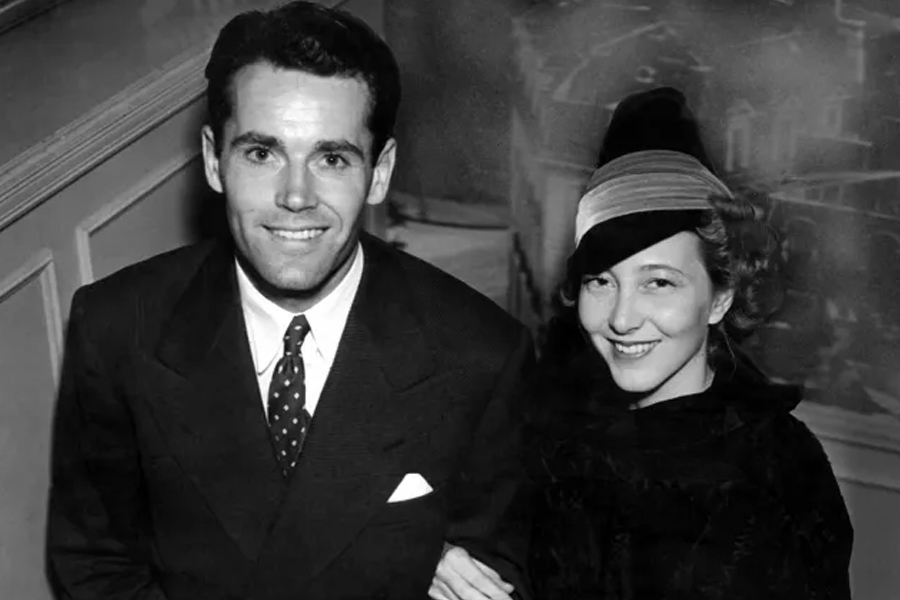
If lineage is a ripple in a pond, their ripples reached film and art. Through later unions and remarriages, the family connects to actors and to a contemporary gallery owner who operates in London. I find it interesting that threads from a New York clothing fortune braid into Hollywood and the modern art market. Families evolve like species, adapting to new cultural climates. One branch moved into diplomacy and politics via marriage, another into galleries and the white cube.
What I notice about the man himself
I think of him as a man of two casts. One cast was formal, learned, shaped by universities and the law. The other was social, shaped by family fortunes, clubs, and the expensive rituals of New York society. He was not a business founder; he inherited a commercial dynasty and then used his training in law to manage the consequences. His life was relatively short – he died in 1935 – and much of his imprint is legal and domestic rather than entrepreneurial. Yet those legal moves influenced the fate of buildings and lives for decades.
FAQ
Who was George Tuttle Brokaw
He was an heir, a lawyer, and a social figure born in 1879. He trained at notable institutions and became known for litigation over family real estate in Manhattan. I view him as a connector between a nineteenth century textile fortune and twentieth century cultural networks.
Who were his parents
His father was a clothing merchant who established the family firm that built the fortune. That enterprise set the stage for the mansion, the litigation, and the later social prominence of his descendants.
Who were his spouses and children
He married twice. His first marriage in the 1920s ended in divorce in 1929. From that union came a daughter born in the mid 1920s who died young. He remarried in 1931 and had another daughter later that year who would enter art and cultural circles.
What was the Brokaw Mansion controversy
In the 1920s he sought to demolish and redevelop the family mansion into apartments. The proposal triggered legal challenges and referee rulings. The dispute reads as an early twentieth century example of how urban elites sought to monetize prime real estate when social functions of city houses began to shift.
Are there famous descendants or relatives
Yes. Through remarriage and later family ties the broader family connects to major figures in film and to contemporary art world personalities. Those connections mean the family name surfaces in both cultural and public histories.
When did he die
He died in 1935 at the age of 55. The date marked the end of his direct story but not the end of the ripples that flowed from his marriages, legal battles, and daughters.